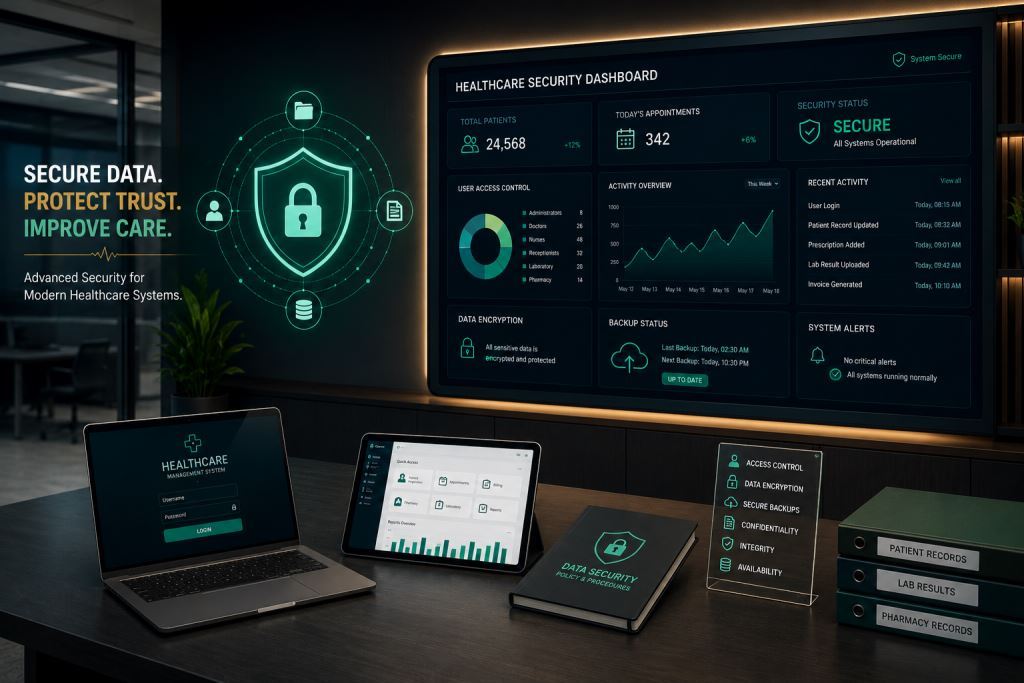

Hospital Data Security and Patient Confidentiality in Digital Healthcare Systems
Hospital data security Cameroon is becoming a priority for clinics, hospitals, laboratories, pharmacies, and healthcare centers that want to improve daily operations. Many healthcare facilities still depend on paper records, WhatsApp messages, or scattered spreadsheets. These methods make it difficult to protect patient information and maintain accurate records. Prosoft Africa helps clinic owners, hospital administrators, doctors, nurses, receptionists, cashiers, pharmacists, and laboratory teams use digital solutions that improve security, reporting, and accountability across Cameroon and Africa.
Patient confidentiality is more than a legal requirement. It is the foundation of trust between healthcare providers and patients. People expect hospitals to protect their personal and medical information. When organizations fail to secure patient data, they risk losing confidence and damaging their reputation.
This guide explains how hospital data security Cameroon fits into a complete hospital management software strategy. It focuses on practical implementation, staff adoption, reporting, system configuration, and ongoing support. It also helps healthcare decision-makers understand the key features to evaluate before investing in a digital healthcare platform.
Discover our Hospital Management Software and strengthen patient data security, protect confidential medical records, manage user access, and improve reporting with our hospital data security software for clinics, hospitals, laboratories, and healthcare centers.
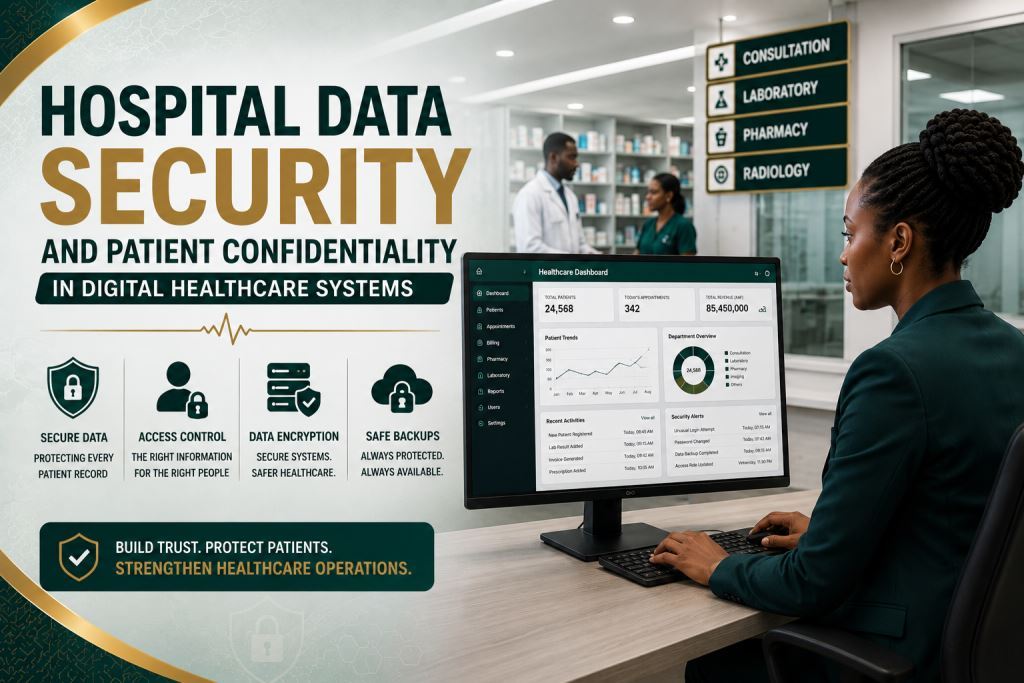
Why Hospital Data Security Cameroon Matters for Daily Operations
Many healthcare organizations manage patient registration, appointments, consultations, billing, pharmacy records, laboratory results, and reports using separate notebooks, spreadsheets, or mobile phones. This approach often creates duplicate records, delays, and communication problems. Staff may struggle to identify the latest patient information, while managers find it difficult to monitor daily activities.
Common warning signs include lost patient files, long reception queues, inaccurate invoices, pharmacy stock shortages, and delayed laboratory reports. These issues may appear minor at first, but they become costly as the organization grows or new employees join the team.
A reliable digital healthcare system reduces confusion by storing information in one secure location. Staff can quickly find patient records, while managers receive accurate reports for faster decision-making. Instead of replacing professional judgment, technology supports healthcare workers by providing a structured and consistent workflow.
Across Cameroon and Africa, healthcare organizations also need software that is easy to use. A good system should include simple interfaces, role-based access, practical staff training, and continuous technical support. These features encourage faster adoption and help employees work with confidence.
Key Hospital Data Security Cameroon Features to Look For
A secure hospital management system should protect sensitive information while improving daily efficiency. The following features help healthcare organizations maintain patient confidentiality and improve operational control.
1. Role-Based Medical Access
Role-based access allows each employee to view only the information required for their responsibilities. Doctors, nurses, receptionists, pharmacists, accountants, and administrators receive different access permissions. This approach protects confidential records while allowing staff to perform their daily tasks efficiently.
When organizations implement role-based permissions correctly, hospital data security Cameroon becomes stronger. Staff spend less time searching for information and more time serving patients.
Effective role-based access depends on well-managed staff accounts and clearly defined user responsibilities. Read our article Hospital Staff Management Software Africa For Duty Rosters And User Access to discover how healthcare organizations can manage employee permissions, organize user roles, and strengthen operational security through structured staff access management.