
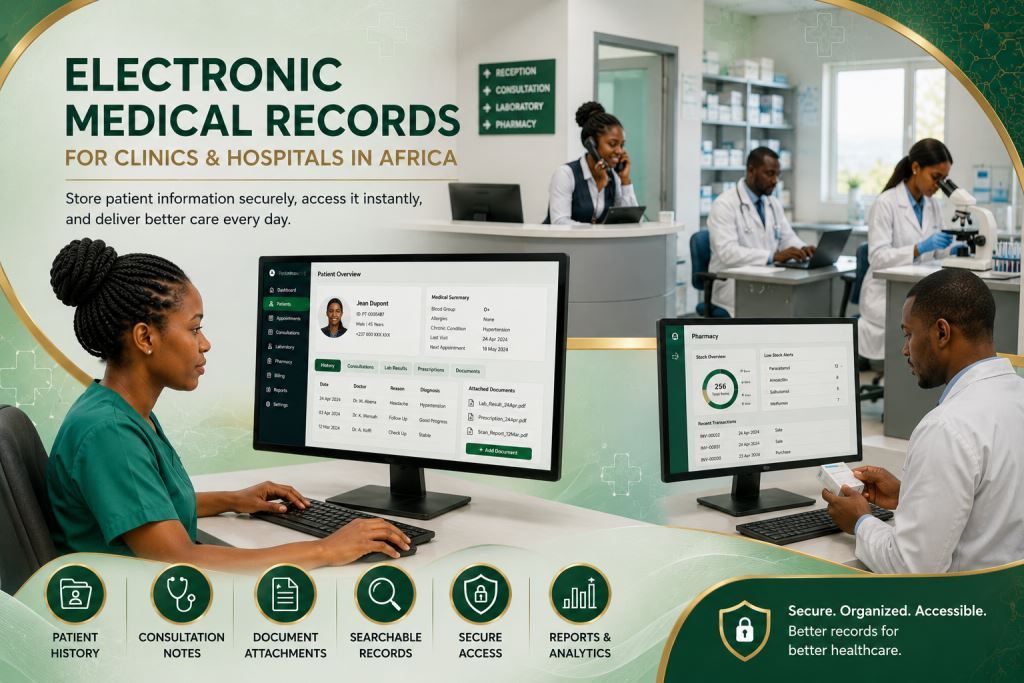
Electronic Medical Records for Clinics and Hospitals in Africa
Electronic medical records Africa is becoming important for clinics, hospitals, laboratories, pharmacies and healthcare centers that want to organize daily work without depending only on paper, WhatsApp messages or scattered spreadsheets. Prosoft Africa helps clinic owners, hospital administrators, doctors, nurses, receptionists, cashiers, pharmacists and laboratory teams use digital tools for better records, clearer reports and practical accountability across Cameroon and Africa.
Electronic records help healthcare teams find information faster. However, they must be introduced with respect for confidentiality and professional workflow.
This article explains how the topic fits inside a complete hospital management software strategy. It focuses on practical use, staff adoption, reporting, setup and support so that decision makers can understand what to look for before choosing a platform.
Discover our hospital management software to improve healthcare operations and efficiency across clinics and hospitals.
Why this topic matters for daily operations
The problem usually begins when patient registration, appointments, consultations, billing, pharmacy, laboratory results, staff access and reports are handled in different notebooks, phones, spreadsheets or verbal instructions. The organization may still operate every day, but it becomes difficult to know which record is final, who entered it, and whether managers are seeing the truth on time.
Common warning signs include lost patient files, long queues at reception, unclear invoices and pharmacy stock gaps. These problems may look small at first, but they become expensive when the organization grows or staff change positions.
A digital system should reduce confusion without making the team feel lost. The aim is not to replace professional judgment or local experience. Instead, the aim is to give staff a shared structure for daily work and give owners a reliable way to see what is happening.
In Cameroon and across Africa, many organizations also need a solution that can work with different levels of computer experience. Therefore, a good platform should include simple screens, clear steps, user permissions, practical training and support that respects the pace of the team.
Key features to look for
1. Patient History
Patient history should be simple to use by authorized staff during normal daily work, not only during end-of-month reporting. It should allow the organization to capture the right information once, store it in the correct record and make it available when needed by a manager, accountant or supervisor.
For clinics, hospitals, laboratories, pharmacies and healthcare centers in Cameroon and across Africa, this reduces repeated data entry and improves reliability in daily operations. When this feature is well configured inside electronic medical records Africa, staff spend less time searching for information and more time serving patients, reception teams, nurses, doctors, cashiers, pharmacists, laboratory staff and administrators.
Electronic medical records become even more valuable when they improve the overall administration of healthcare facilities. Read our article How Digital Hospital Records Improve Healthcare Administration to discover how digital patient records strengthen efficiency, coordination and decision-making across clinics and hospitals.
2. Consultation Notes
Consultation notes must also be easy to use during normal operations and not limited to reporting periods. They help ensure that medical information is recorded once and stored correctly for future use.
In clinics, hospitals, laboratories, pharmacies and healthcare centers across Cameroon and Africa, this improves consistency and reduces duplication. When consultation notes are properly configured inside electronic medical records Africa, teams can access accurate patient information quickly and work more efficiently.
3. Document Attachments
Document attachments should allow staff to add medical files, prescriptions, lab results and reports directly into patient records.
This improves organization in clinics, hospitals, laboratories, pharmacies and healthcare centers in Cameroon and Africa. When this feature is properly used inside electronic medical records Africa, it reduces paperwork and improves access to important documents.
4. Searchable Records
Searchable records make it easier to quickly find patient information using filters, names or reference numbers.
This is especially useful in busy clinics, hospitals, laboratories, pharmacies and healthcare centers across Cameroon and Africa. With electronic medical records Africa, staff can retrieve information faster and reduce delays in service delivery.
5. Department Access
Department access ensures that each staff member only sees the information relevant to their role.
This improves security and organization in healthcare facilities across Cameroon and Africa. When configured correctly in electronic medical records Africa, it helps protect sensitive data while improving workflow efficiency.
6. Record Continuity
Record continuity ensures that patient information follows the patient across all departments and visits.
This is very important in clinics, hospitals, laboratories, pharmacies and healthcare centers in Cameroon and Africa. With electronic medical records Africa, continuity of care is improved and duplication of records is reduced.
Benefits for owners, managers, staff and customers
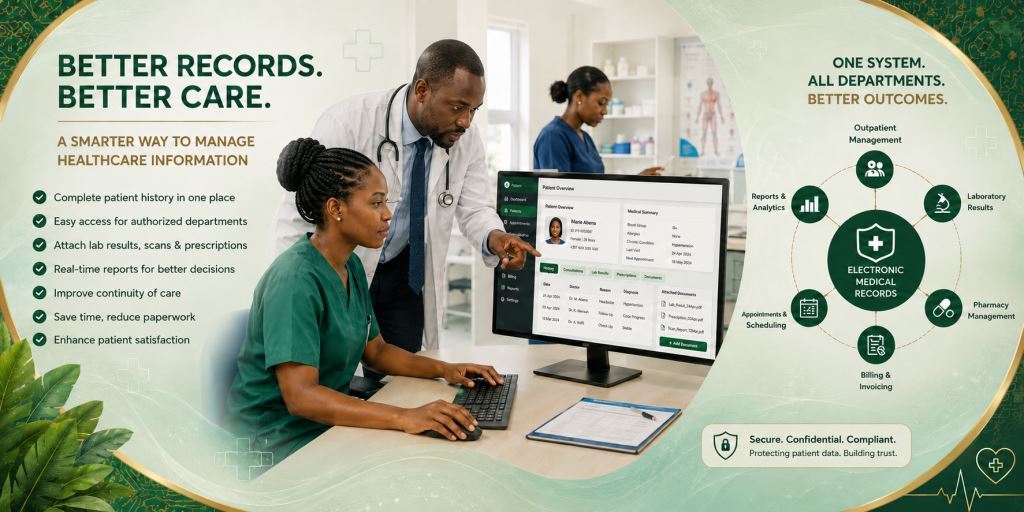
The first benefit is visibility. Owners and managers can move away from verbal reporting and instead rely on structured digital reports that show real-time activity.
The second benefit is accountability. Each action in the system is traceable, making it easier to identify who created, edited or approved a record.
The third benefit is speed. Staff can quickly access information without moving between departments or searching through paper files.
The fourth benefit is planning. Digital records reveal patterns such as busy periods, delays, stock usage and operational performance, helping managers make better decisions.
How to implement it without confusing the team
Implementation should begin with a simple workflow audit. Before any software setup, the organization should clearly identify existing processes, required reports, users who need access and current operational challenges.
This helps configure electronic medical records Africa based on real work conditions instead of assumptions.
A successful deployment requires careful planning before installation begins. Explore our article How To Implement Electronic Medical Records Without Disrupting Clinic Work to learn practical steps for introducing electronic medical records while maintaining smooth daily healthcare operations.
Data preparation
Data preparation is an important step in the deployment process. Clinics, hospitals, laboratories, pharmacies and healthcare centers must organize patient data, staff information and existing records before migration.
This step helps avoid duplication and ensures a clean and reliable system once the software is in use across Cameroon and Africa.
Staff training
Staff training is essential for successful adoption. Each user should understand their specific role within the system and how to perform daily tasks correctly.
Training should be practical and role-based so that doctors, nurses, receptionists, cashiers, pharmacists and administrators can use electronic medical records Africa efficiently.
Post-launch support
Post-launch support ensures system stability after deployment. During this phase, issues are corrected quickly and users receive guidance to improve their usage of the system.
This support is important for clinics, hospitals, laboratories, pharmacies and healthcare centers across Cameroon and Africa to ensure long-term success.
Availability across Cameroon and Africa
Prosoft Africa supports clinics, hospitals, laboratories, pharmacies and healthcare centers across Cameroon, including Douala, Yaoundé, Buea, Bamenda, Limbe, Bafoussam, Garoua, Maroua, Ngaoundéré and Bertoua.
Organizations in other African countries can also access remote installation, online demos, training and continuous support. This is especially useful for institutions that need structured digital systems but operate with different levels of technical capacity.
Checklist before requesting a demo
Before requesting a demo, organizations should clearly define their operational needs. Clinics, hospitals, laboratories, pharmacies and healthcare centers must identify the data they want to manage within electronic medical records Africa.
This solution becomes more effective when requirements are well defined before configuration. This ensures a smoother setup and better adoption across all departments.
Organizations should also define system users and assign clear access levels for each role to ensure proper usage and data security.
Frequently asked questions
Who should use electronic medical records Africa?
It is designed for clinic owners, hospital administrators, doctors, nurses, receptionists, cashiers, pharmacists and laboratory teams who need better record management and improved reporting.
Can the system be used by beginners?
Yes, the system is designed with a simple interface and role-based access. This makes it easy for beginners to use in daily healthcare operations.
Should all features be activated at once?
No. It is recommended to start with essential features first and then gradually activate additional modules based on organizational needs.
Conclusion
Electronic medical records Africa is an essential solution for modern healthcare management. It improves patient record handling, enhances operational efficiency and supports better decision-making across healthcare facilities.
Prosoft Africa supports clinics and hospitals across Cameroon and Africa in implementing structured digital solutions tailored to their operational needs.
This system helps reduce errors, improve organization and enhance the overall quality of healthcare services.
Explore more expert articles on electronic medical records Africa, hospital management systems, and healthcare digital transformation across Cameroon and Africa to deepen your understanding.
Stay connected with Prosoft Africa on Facebook, Instagram, LinkedIn, X (Twitter), and TikTokto discover innovative electronic medical records Africa solutions, hospital management systems, live demos, success stories, and updates transforming healthcare across Cameroon and Africa.
