
Customer Loyalty and Delivery Order Management Software for Restaurants

Restaurant customer loyalty delivery software is an essential management solution for restaurants, cafeterias, bakeries, fast-food businesses, catering teams and food-service groups that want cleaner records, faster decisions and stronger customer relationships. Prosoft Africa develops software based on real restaurant operations across Cameroon and Africa instead of relying on repetitive keywords. This article explains how customer loyalty and delivery management software organizes daily activities, reduces common operational mistakes and supports successful implementation.

Many restaurants struggle because customer information is scattered across notebooks, spreadsheets, mobile phones, messaging applications and handwritten delivery records. Consequently, employees spend valuable time searching for information instead of serving customers efficiently. A modern restaurant management system centralizes customer profiles, delivery records and order histories in one secure database. As a result, information becomes easier to access, verify and update.

Furthermore, customer loyalty and delivery management should never operate as isolated functions. Instead, they should form part of a complete restaurant management software solution that includes POS sales, orders, tables, menus, recipes, inventory management, expenses, employee schedules, customer records and daily profit reports. Consequently, restaurant owners build a reliable management platform that supports business growth, improves customer satisfaction and provides accurate reporting for better decision-making.
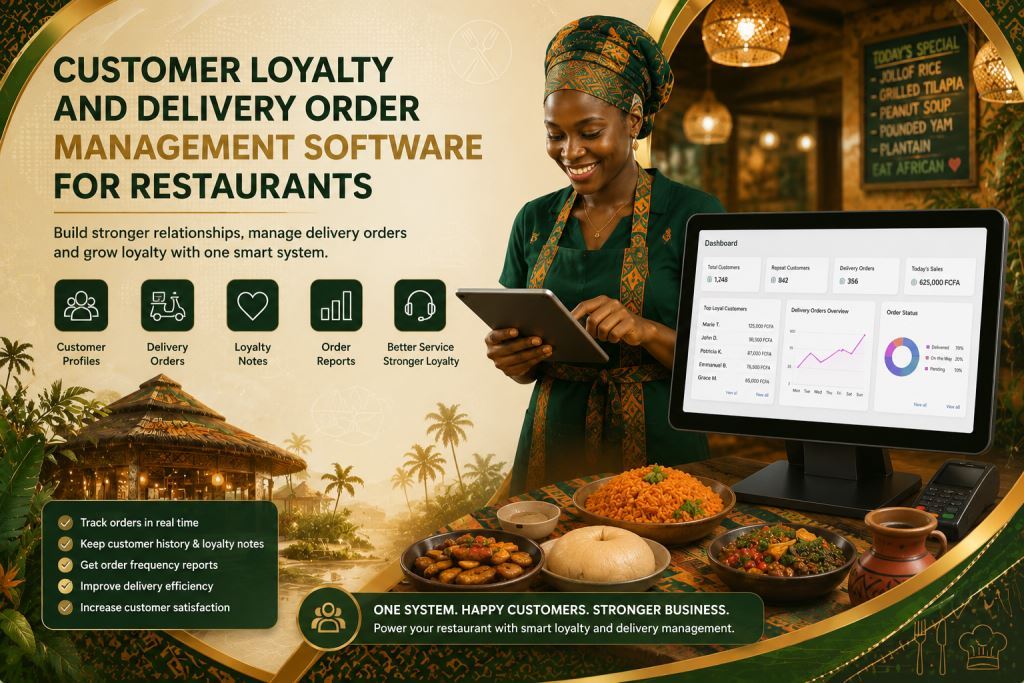
restaurant customer loyalty delivery software with Prosoft Africa software in Cameroon and Africa

Why This Topic Matters for Daily Operations

Organized Customer Records Improve Daily Service

Every business day creates dozens of important activities. Employees register orders, receive payments, prepare deliveries, answer customer requests and resolve service issues. When this information remains scattered across different records, restaurants quickly depend on employee memory. However, this approach becomes unreliable as customer numbers continue to grow.

A structured digital workflow allows every employee to follow the same procedures throughout the day. Consequently, cashiers, waiters, delivery staff and managers know exactly what information to record, verify and review. This consistency reduces mistakes, improves communication and delivers a better customer experience.

Delivery Management Supports Business Growth

Restaurant owners throughout Cameroon and other African countries require software that reflects local operating conditions. Internet availability, staff computer skills, equipment budgets and branch locations often vary from one business to another. Therefore, customer loyalty and delivery software should remain easy to learn, simple to deploy and flexible enough to adapt as the business grows.

Ultimately, successful implementation is not measured by the number of software features. Instead, success comes when employees immediately locate customer information, managers monitor deliveries with confidence and business decisions rely on accurate, organized and up-to-date records.
Common Problems This Software Should Solve

Repeat Customers Are Not Recognized

Many restaurants treat loyal customers like first-time visitors because customer information is incomplete or scattered. As a result, staff cannot view previous orders, preferences or purchase history. Customer loyalty software stores every customer profile in one place, allowing employees to provide faster, more personalized service.

Delivery Orders Are Scattered Across Different Channels

Many delivery requests arrive through phone calls, WhatsApp messages, social media or handwritten notes. Consequently, important information is often duplicated, delayed or forgotten. A centralized delivery management system records every order in one platform and allows staff to track each delivery from start to finish.

Incorrect Delivery Addresses Cause Delays

Restaurants also lose valuable time because customer addresses are incomplete or outdated. Therefore, drivers travel longer distances, deliveries arrive late and customer satisfaction declines. Delivery management software stores accurate addresses and helps employees verify customer information before dispatching every order.

Customer Complaints Are Not Properly Tracked

Some restaurants resolve complaints without recording them. As a result, managers cannot identify recurring service issues or measure customer satisfaction. Customer relationship management software records every complaint, follow-up action and resolution, making continuous service improvement much easier.

Handling customer complaints effectively is an important part of building long-term customer loyalty. Read our article Restaurant Customer Feedback And Complaint Tracking Software to discover how recording customer feedback and resolving complaints systematically can improve service quality and strengthen customer relationships.

Customer Loyalty Is Difficult To Measure

Many restaurant owners cannot identify their most valuable customers because purchase history is not analyzed. Instead, every customer receives the same treatment regardless of loyalty. Customer loyalty software generates reports showing repeat purchases, customer frequency, spending habits and lifetime value. Consequently, restaurants can launch targeted promotions and reward loyal customers more effectively.

Reports Often Lack Supporting Details

Managers sometimes receive summary reports without seeing the transactions behind the figures. However, effective decision-making requires complete information. A reliable restaurant management system allows users to move directly from dashboards to receipts, customer orders, delivery records, invoices and payment histories whenever verification is needed.

Controlled Corrections Improve Accountability

Finally, restaurants occasionally need to correct customer or delivery records. Nevertheless, every modification should remain fully traceable. The software records who made each change, explains why the correction was necessary and shows whether a supervisor approved it. This process protects both the restaurant and its employees while maintaining accurate business records.

Key Features to Look For

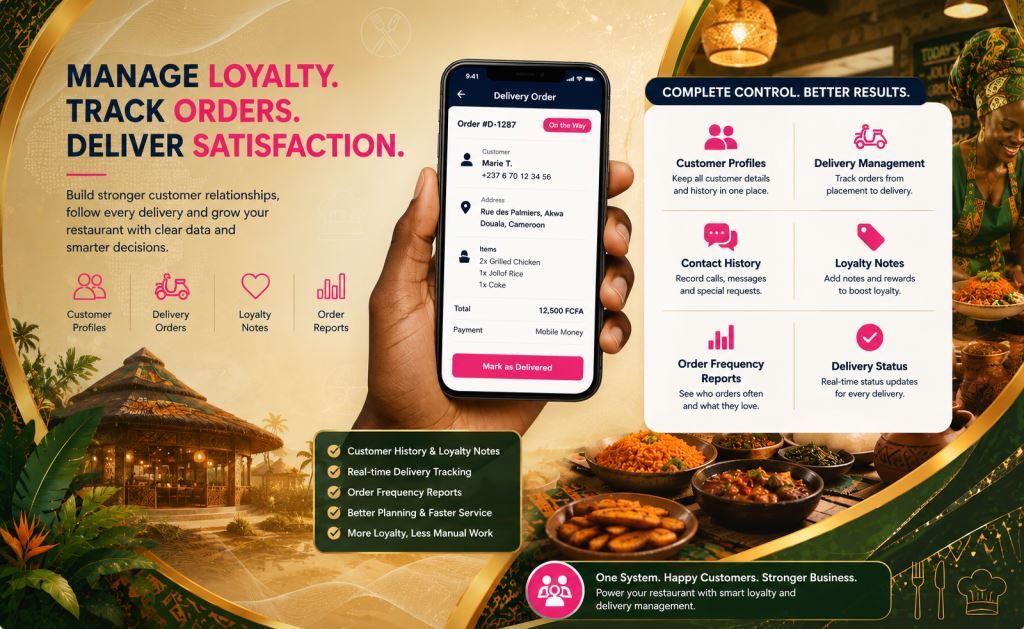
Customer Profiles

Customer profiles should be simple enough for daily users while providing managers with complete customer information. In practice, this feature connects customer records with POS sales, orders, tables, menus, recipes, inventory, expenses, staff schedules and daily profit reports. As a result, restaurants avoid creating isolated databases. When configured properly, employees enter customer information once and reuse it throughout receipts, reports, dashboards and follow-up activities.

Delivery Order List

A centralized delivery order list helps restaurants organize every delivery request from a single location. Consequently, managers can monitor pending, completed and cancelled orders without relying on handwritten notes or phone messages. This feature also improves coordination between cashiers, kitchen staff and delivery personnel.

Restaurants often receive orders from several sources, including dine-in, takeaway, delivery and special events. Explore our article Multi-Channel Restaurant Orders For Dine-In, Takeaway, Delivery And Events to learn how a centralized ordering system simplifies operations and improves customer service across every sales channel.

Contact History

Maintaining a complete contact history allows restaurants to review every customer interaction. Therefore, staff can quickly access previous orders, delivery requests, enquiries and communication records. Accurate histories improve customer service while helping managers understand customer preferences and purchasing habits.

Loyalty Notes

Loyalty notes record customer preferences, reward points, promotions and special requests. As a result, restaurants deliver more personalized service and strengthen long-term customer relationships. This information also supports future marketing campaigns and customer retention strategies.

Order Frequency Report

Order frequency reports help managers identify repeat customers, buying patterns and peak ordering periods. Consequently, restaurant owners can measure customer loyalty, evaluate promotional campaigns and create targeted marketing strategies based on reliable business data.

Delivery Status Tracking

Delivery status tracking enables employees to monitor every order from preparation to final delivery. Meanwhile, customers receive better service because restaurants know exactly where each order is within the delivery process. Managers also gain greater visibility into delivery performance and operational efficiency.

Configure Features According to Business Needs

These features should never be activated without proper planning. The ideal configuration depends on the restaurant’s size, number of users, reporting requirements and operational procedures. Prosoft Africa helps businesses map their workflow before implementation so every feature supports a real business process instead of becoming an unused function.

Benefits for Owners, Managers, Staff and Customers

Better Visibility Across Daily Operations

The first benefit is improved visibility. Restaurant owners and managers no longer rely on scattered conversations or handwritten notes to understand daily performance. Instead, they access organized customer records, delivery information and operational reports from one central system. This visibility helps identify service issues early and supports better business decisions.

Stronger Accountability

The second benefit is greater accountability. Every important activity is linked to a specific employee account, making responsibilities clear and transparent. Consequently, honest staff members are protected from unfair accusations, while managers can distinguish isolated mistakes from recurring operational problems. This creates a more professional and reliable working environment.

Faster Customer Service

The third benefit is speed. Employees no longer waste time searching through notebooks, phones or paper files for customer information. Instead, they can quickly retrieve customer profiles, previous orders, delivery addresses and payment history. Faster access to information improves service quality and reduces customer waiting times.

restaurant customer loyalty delivery software with Prosoft Africa software in Cameroon and Africa2

Better Business Planning

The fourth benefit is improved planning. Reliable customer and delivery data allow managers to identify purchasing trends, peak delivery periods, repeat customers and revenue patterns. As a result, restaurants can prepare promotions, optimize staffing, improve delivery performance and make informed business decisions based on real operational data rather than assumptions.

How to Implement It Without Confusing the Team

Start with a Workflow Assessment

Begin by reviewing how customer service and delivery operations currently work. Identify how orders are received, how customer information is recorded, how deliveries are managed and where mistakes occur most often. This assessment provides a clear foundation for configuring the software according to real operational needs.

Prepare Essential Business Data

Before implementation, clean and organize the most important information. Active customer records, delivery addresses, user accounts, menu categories and opening balances should be reviewed carefully. As a result, employees begin using accurate information from the first day instead of correcting errors later.

Define User Roles and Permissions

Different employees require different levels of access. Cashiers, waiters, kitchen staff, delivery drivers, supervisors and managers should each receive permissions that match their responsibilities. Proper access control simplifies daily operations while protecting sensitive business information.

Train Employees with Real Business Scenarios

Training should reflect actual restaurant activities rather than theoretical examples. Employees should practice creating customer profiles, processing delivery orders, updating delivery status, recording payments and resolving customer requests. Consequently, users gain confidence more quickly because the training mirrors their daily responsibilities.

Monitor Performance After Launch

Implementation should continue after the software goes live. During the first few weeks, managers should review customer records, delivery reports, employee activity and operational dashboards to ensure that information is entered correctly. Regular follow-up helps eliminate old manual habits and improves long-term system adoption.

Expand the System Gradually

Successful implementation should be progressive rather than rushed. Restaurants should first master the essential customer and delivery workflows before enabling advanced features such as loyalty programs, customer analytics, marketing campaigns, automated notifications, business dashboards and multi-branch management. This gradual approach improves user adoption while reducing confusion and operational disruptions.

Available Across Cameroon and Africa

Prosoft Africa provides software implementation, staff training and technical support for restaurants, cafeterias, bakeries, fast-food businesses, catering companies and food-service groups throughout Cameroon, including Douala, Yaoundé, Buea, Bamenda, Limbe, Bafoussam, Garoua, Maroua, Ngaoundéré and Bertoua. Businesses in other African countries can also request online demonstrations, remote installation, user training and continuous technical support to ensure successful software deployment and long-term operational success.

Explore all the features of our restaurant management software, including loyalty programs and delivery order management tools.

Frequently Asked Questions

Who should use restaurant customer loyalty delivery software?

Restaurant customer loyalty delivery software is ideal for restaurant owners, managers, cashiers, waiters, kitchen teams, catering businesses and food-service operators who want stronger customer relationships, organized delivery management, clearer reporting and less dependence on manual records.

Should every feature be activated on the first day?

No. Most restaurants achieve better results by implementing the core customer and delivery workflow first. Additional features such as loyalty programs, advanced reporting and customer analytics can be introduced gradually as employees become familiar with the system.

Can Prosoft Africa support restaurants with limited computer experience?

Yes. Prosoft Africa provides practical, role-based training that focuses on the daily responsibilities of each employee. Continuous follow-up and technical support help staff adopt the software confidently and efficiently.

Conclusion

Choosing restaurant customer loyalty delivery software should be considered a strategic business decision rather than simply purchasing another application. The right solution helps restaurants organize customer information, manage delivery operations, improve reporting, strengthen customer loyalty and support employees with efficient digital workflows. The greatest benefits are achieved when reliable software, proper staff training and disciplined management practices work together.

Prosoft Africa helps restaurants, cafeterias, bakeries, fast-food businesses, catering companies and food-service groups throughout Cameroon and across Africa analyze their operational requirements, configure the appropriate software modules, train employees and provide ongoing technical support after deployment. Request a personalized demonstration today and discover how the system can be configured to match your restaurant’s real operational workflow.

Transform the way you manage your restaurant with Prosoft Africa. Explore expert articles on restaurant management software, POS systems, inventory control, order management, billing, and business automation. Visit our blog to discover practical strategies and innovative solutions that help restaurants improve efficiency, increase profitability, and deliver exceptional customer service.

Follow Prosoft Africa on Facebook, Instagram, LinkedIn, X (Twitter), and TikTok  for live demos, expert insights, customer success stories, and the latest innovations transforming restaurant management across Africa.