
Student Accounts Receivable and School Debtor Follow-Up Software
School accounts receivable management Cameroon is a serious management topic for schools, colleges, bilingual institutions, training centers and education groups that want cleaner records, faster decisions and better accountability. Prosoft Africa develops software content around real school operations in Cameroon and across Africa . The purpose of this article is to help school owners, principals, bursars, accountants, secretaries, teachers and education groups understand what the software should organize, which mistakes they should avoid and how to prepare for a successful implementation.
For many organizations, the challenge is not simply the absence of software. The deeper problem is that important information is scattered across notebooks, spreadsheets, mobile phones, receipt books and verbal updates. As a result, managers spend too much time searching for answers and too little time improving service quality. A reliable system transforms daily activities into structured records that staff can search, verify and report with confidence.
In this context, debtor follow-up should remain respectful, well documented and properly organized. Schools can then reduce outstanding balances without creating confusion for parents or staff members. The best approach is to connect this process to a complete school management software strategy that includes student records, school fees, receipts, examinations, report cards, attendance, parent communication and administrative reports. Consequently, the institution does not purchase another isolated application. Instead, it builds a complete management foundation that supports growth, additional users, multiple campuses and stronger reporting over time.
Why This Topic Matters for Daily Operations
Daily school operations create many important decisions. Staff members record payments, update balances, review reports and monitor follow-up activities throughout the day. When these decisions are stored in different places, the organization becomes dependent on memory. That approach may work for a small team. However, it becomes unreliable as the workload increases.
A strong digital workflow helps every employee follow the same procedures, even during busy periods. Consequently, each user knows what information to enter, what actions require approval and what reports should be reviewed. Managers also distinguish normal delays from genuine operational risks much earlier. For this reason, software should be viewed as a management improvement rather than simply a computer purchase.
Schools in Cameroon and across other African countries also require practical deployment. Internet access varies from one location to another. Staff computer skills, language requirements, hardware budgets and branch locations also differ. Therefore, the software should remain clear, easy to learn and adaptable to different working environments. At the same time, it should improve administrative discipline and increase record accuracy.
The strongest indicator of a successful implementation is not the number of available features. Instead, success appears when users no longer ask where information is stored because the workflow naturally guides them to the correct record. That is the level of organization school owners, principals, bursars, accountants, secretaries, teachers and education groups should expect when evaluating school accounts receivable management Cameroon solutions.
Common Problems This Software Should Solve
Tracking Outstanding School Fees
One common problem is that staff follow outstanding balances from memory instead of using documented records. At first, this issue may appear minor, especially when an experienced employee remembers every account. However, when the same situation occurs repeatedly, it becomes a serious management weakness. Good software keeps every balance visible, links it to the correct student or transaction and preserves enough history for the team to understand exactly what happened.
Another common problem is that parents receive different outstanding balances from different offices. Initially, this inconsistency may appear harmless. Nevertheless, repeated differences reduce confidence and create unnecessary disputes. Reliable software maintains one accurate balance for every student and allows every authorized user to consult the same information.
Parent Follow-Up and Payment Commitments
A further challenge appears when promises to pay are never documented. At first, staff may remember verbal commitments. Eventually, those promises are forgotten or misunderstood. Effective software records every commitment, connects it to the student’s account and provides a clear history for future follow-up.
Many schools also struggle to separate old balances from current-term balances. Consequently, managers cannot easily identify which debts require immediate attention. A reliable system classifies outstanding fees correctly, making financial reports easier to understand and improving collection planning.
Another common problem is that reminder messages are sent too late. Staff may intend to contact parents, yet manual processes often delay communication. Over time, these delays increase arrears and make collection more difficult. Good software schedules follow-up activities, tracks reminder history and helps schools contact parents at the appropriate time.
Reporting and Administrative Control
Another important challenge is that managers often receive summary reports without supporting details. A financial total may appear correct while its source remains unclear. Reliable software allows administrators to move directly from a summary report to the related receipts, attendance records, invoices, balances, payment histories, stock movements or service notes, depending on the organization’s workflow.
A final problem concerns informal corrections. Every professional organization must be able to correct mistakes. However, those corrections should always remain controlled. The system should identify who made each change, explain why the correction was necessary and record whether a supervisor approved it. This process protects both the institution and honest members of staff.
Key Features to Look For
Student Balance Management
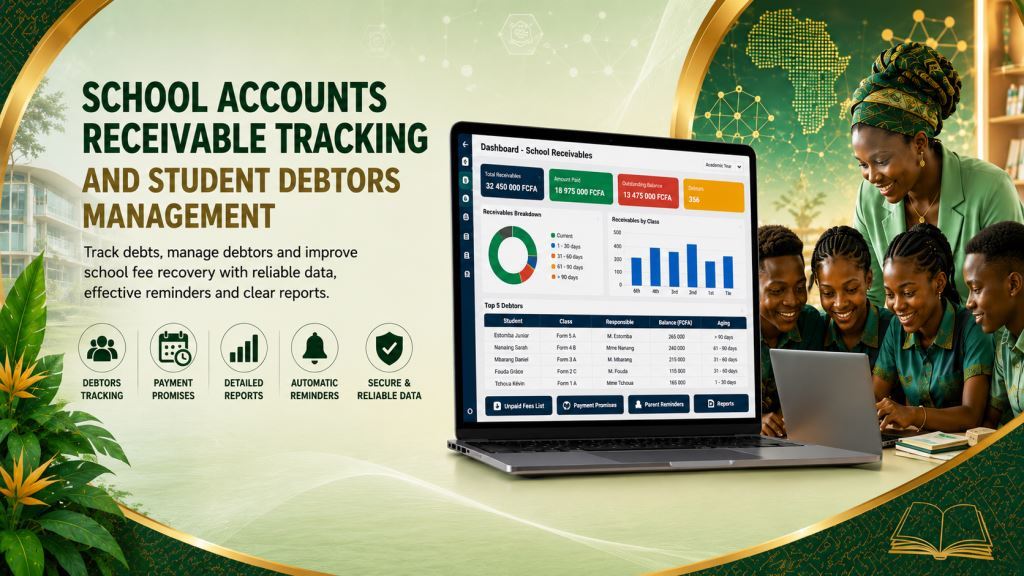
Debtor aging report: This feature should remain simple for daily users while providing the level of detail managers require. In practice, it connects debtor follow-up with student records, school fees, receipts, examinations, report cards, attendance, parent communication and administrative reports. As a result, the school avoids creating isolated records. When configured correctly, staff enter information once, verify it quickly and reuse it across reports, receipts, dashboards and follow-up activities.
Balance history: Every balance should include a complete financial history. This feature records previous balances, payments, adjustments and outstanding amounts in one place. Consequently, managers and bursars understand how each account reached its current status. Staff also answer parent questions more confidently because they have access to complete financial records instead of fragmented information.

Parent Communication and Debtor Follow-Up
Parent reminder notes: Effective debtor follow-up depends on clear communication. This feature allows staff to record reminder dates, discussion notes and follow-up actions for every parent. As a result, every authorized user sees the same information and avoids repeating or missing important communication.
Class-level arrears list: Administrators often need to review outstanding balances by class or academic level. This feature groups debtors according to their classes, making it easier to identify payment trends and organize follow-up campaigns. Managers can therefore monitor arrears more efficiently while prioritizing the accounts that require immediate attention.
Payment promise tracking: Parents sometimes request additional time before completing their payments. This feature records every payment promise together with the agreed dates and follow-up status. Consequently, schools monitor commitments more effectively and reduce misunderstandings between parents and administrative staff.
Management review dashboard: School leaders need a clear overview of outstanding balances before making financial decisions. This dashboard summarizes debtor information, overdue accounts, collection progress and follow-up activities in one location. Managers can therefore review performance quickly without searching through multiple reports.
These features should never be activated without careful planning. Instead, the configuration should reflect the size of the institution, the number of users, the reporting requirements and the level of financial control required. Prosoft Africa first studies the school’s workflow. Afterwards, each feature is configured to support a real operational process rather than becoming an unused option.
Benefits for Owners, Managers, Staff and Users
The first benefit is improved visibility. School owners and managers no longer depend on scattered verbal updates or disconnected records. Instead, they review structured information from one centralized system. This visibility helps them detect collection issues earlier, support departments more effectively and make decisions based on reliable information.
The second benefit is stronger accountability. Every user operates with an individual account, while every important action remains connected to that account. Consequently, the institution understands responsibilities more fairly. Honest staff members receive better protection, and managers distinguish isolated mistakes from recurring process problems.
The third benefit is greater efficiency. Staff no longer move from office to office searching for paper files or payment records. Search tools, dashboards, filters and financial histories make information available within seconds. As a result, parents receive faster answers, administrators work more efficiently and managers obtain the information they need without unnecessary delays.
The fourth benefit is better planning. Reliable financial data allows managers to monitor payment trends, recurring balances, staff workload, branch performance and revenue movements. They also identify overdue accounts much earlier and prepare collection strategies before arrears become difficult to recover. Consequently, schools improve financial planning while strengthening long-term administrative control.
How to Implement It Without Confusing the Team
Prepare Before Deployment
Start with a workflow audit. Identify the tasks staff perform every day, the records they create, the reports managers expect and the stages where errors usually occur. This assessment provides a clear foundation before implementing the software. It also helps the school configure the system according to real operational needs instead of assumptions.
Next, prepare the most important data before launch. The software does not require every historical record on the first day. However, active student records, user accounts, opening balances, debtor information and key financial categories should be accurate before implementation begins. Careful preparation reduces errors and improves user confidence from the beginning.
Afterward, define user roles clearly. Cashiers, bursars, teachers, receptionists, managers, accountants, stock keepers and branch supervisors should not all receive the same permissions. Appropriate access control strengthens security while keeping the system simple and organized. It also ensures that each user accesses only the information required for daily responsibilities.
Train Users and Review Performance
Provide practical training instead of theoretical demonstrations. Use real examples of student payments, outstanding balances, debtor follow-up, payment promises, reminder notes and financial reports that reflect everyday school operations. Users become confident more quickly when training matches the tasks they perform every day.
During the first weeks after deployment, review the system regularly. Managers should verify reports, confirm that users enter information correctly and identify any remaining manual practices that create duplicate work. Regular reviews encourage staff to follow the new workflow consistently and improve the quality of administrative records.
Implementation should remain progressive rather than overwhelming. Launch the essential workflow first. Once staff members become comfortable with the core functions, the organization can introduce advanced reports, branch controls, parent communication tools, debtor analytics, management dashboards and additional modules without disrupting daily operations.
Available Across Cameroon and Africa
Prosoft Africa provides software setup, staff training and continuous technical support for schools, colleges, bilingual institutions, training centers and education groups throughout Cameroon. Services are available in Douala, Yaounde, Buea, Bamenda, Limbe, Bafoussam, Garoua, Maroua, Ngaoundere, Bertoua and many other communities. The wording remains natural because the objective is to demonstrate service coverage without repeating city names unnecessarily.
Schools and education groups outside Cameroon can also request online demonstrations, remote installation, practical staff training and ongoing technical support. This approach helps institutions across Africa implement structured management software while receiving guidance throughout configuration, adoption and long-term reporting.
Discover how our school management software simplifies school accounts receivable management and improves fee collection efficiency.
Frequently Asked Questions
Who should use school accounts receivable management Cameroon?
This solution is suitable for school owners, principals, bursars, accountants, secretaries, teachers and education groups that want better organization, clearer financial reports and less dependence on manual debtor tracking.
Should every feature be used on the first day?
No. Most institutions achieve better results by implementing the essential workflow first. After users become familiar with the system, additional modules can be activated gradually.
Can Prosoft Africa support teams with limited computer experience?
Yes. Prosoft Africa provides practical, role-based training followed by continuous support. This approach helps every user learn the exact tasks required for daily operations while improving confidence throughout the implementation process.
Conclusion
Choosing school accounts receivable management Cameroon should be treated as an important management decision rather than simply a software purchase. The right solution helps schools organize debtor follow-up, monitor outstanding balances, improve reporting, strengthen financial accountability and support staff without creating additional complexity. The strongest results appear when software, staff training and good management practices work together.
Prosoft Africa helps schools, colleges, bilingual institutions, training centers and education groups throughout Cameroon and across Africa review their operational needs, configure the appropriate modules, train users and support successful adoption after deployment. To move forward, request a demonstration, prepare your current workflow questions and discover how the system can be configured to match your school’s real operational requirements.
Expand your knowledge with expert articles on school management software, digital transformation, and education technology across Cameroon and Africa. Explore practical insights, industry trends, and innovative solutions on our blog.
Stay connected with Prosoft Africa on Facebook, Instagram, LinkedIn, X (Twitter), and TikTok for expert tips, live demos, customer success stories, and the latest innovations transforming education across Africa.
