
Restaurant Staff Shift Management Software
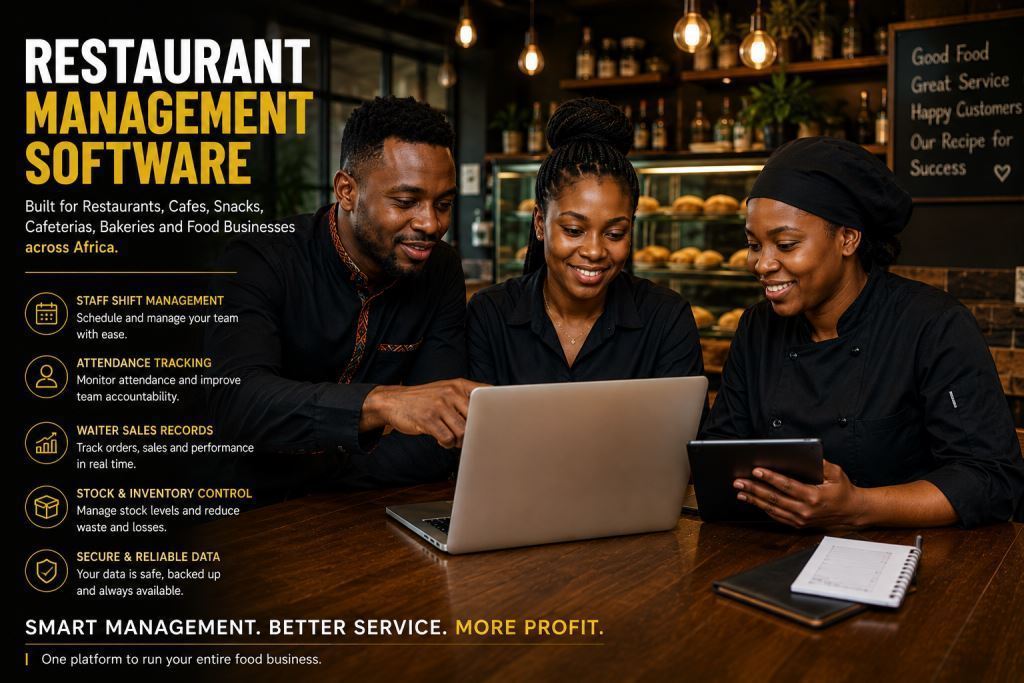
Restaurant staff shift management software is becoming essential for restaurants, cafés, snacks, cafeterias, bakeries and food businesses that want to organize daily operations more efficiently. Many businesses still rely on paper records, WhatsApp messages or scattered spreadsheets. Although these methods may work at first, they become difficult to manage as the business grows.
Prosoft Africa helps restaurant owners, managers, cashiers, waiters, kitchen teams, stock controllers and accountants use digital tools to improve record management, reporting and accountability across Cameroon and Africa.
Managing restaurant staff becomes easier when work schedules, attendance and sales responsibilities are recorded accurately instead of depending on memory or handwritten notes. As a result, managers can monitor daily activities more effectively and respond quickly when problems arise.
This article explains how restaurant staff shift management software fits into a complete restaurant management strategy. It also highlights the practical benefits, essential features, staff adoption, implementation process and ongoing support. Consequently, decision-makers can better evaluate the right solution before making an investment.
Learn more about our Restaurant Management Software and discover how Restaurant Staff Shift Management Software helps restaurants improve staff scheduling, attendance tracking, reporting and daily operations across Cameroon and Africa.
Why restaurant staff shift management software matters for daily operations
Many restaurants still manage POS sales, customer orders, tables, menu prices, kitchen preparation, stock, staff shifts and daily closing using separate notebooks, spreadsheets or verbal instructions. While this approach may keep the business running, it often creates confusion and delays.
Managers may struggle to identify the latest record, determine who entered specific information or confirm whether reports are accurate. Consequently, decision-making becomes slower and less reliable.
Common warning signs include missed sales, order confusion between waiters and the kitchen, stock shortages and poor expense tracking. At first, these issues may appear minor. However, they often become costly as the business expands, employees change roles or managers need reliable information quickly.
A digital solution should simplify daily work without making employees feel overwhelmed. Rather than replacing professional experience, it provides a structured way to manage operations and helps owners monitor business performance with confidence.
Across Cameroon and Africa, many restaurants employ staff with different levels of computer experience. Therefore, an effective restaurant staff shift management software solution should offer an easy-to-use interface, clear workflows, user permissions, practical training and responsive support.
Key features to look for in restaurant staff shift management software
1. Staff profiles
Staff profiles help restaurants maintain complete and accurate employee records in one secure location. Authorized users can enter information once and retrieve it whenever needed. This eliminates duplicate records and improves the reliability of daily operations.
For restaurants, cafés, snacks, cafeterias, bakeries and food businesses across Cameroon and Africa, this feature simplifies employee management while reducing unnecessary paperwork. When staff profiles are properly configured in restaurant staff shift management software, managers spend less time searching for information and more time supervising operations.
2. Shift schedules
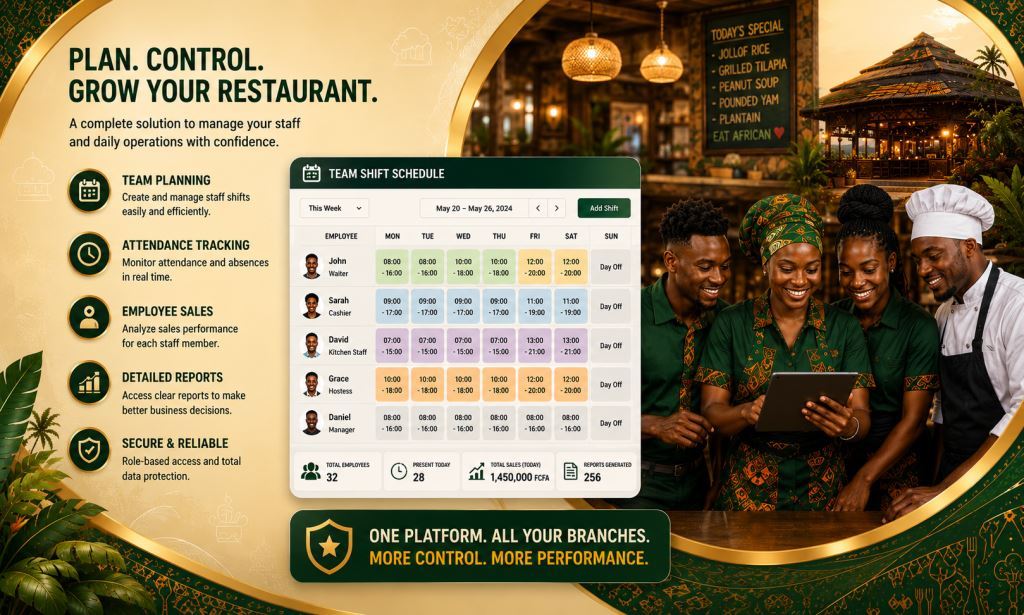
Shift schedules allow managers to organize employee working hours clearly and efficiently. Instead of relying on handwritten schedules or verbal instructions, staff members can follow structured work plans that reduce confusion.
In addition, managers can quickly review schedules, make adjustments and ensure adequate staffing during busy periods. When shift schedules are integrated into restaurant staff shift management software, restaurants improve coordination, strengthen accountability and support better customer service.