
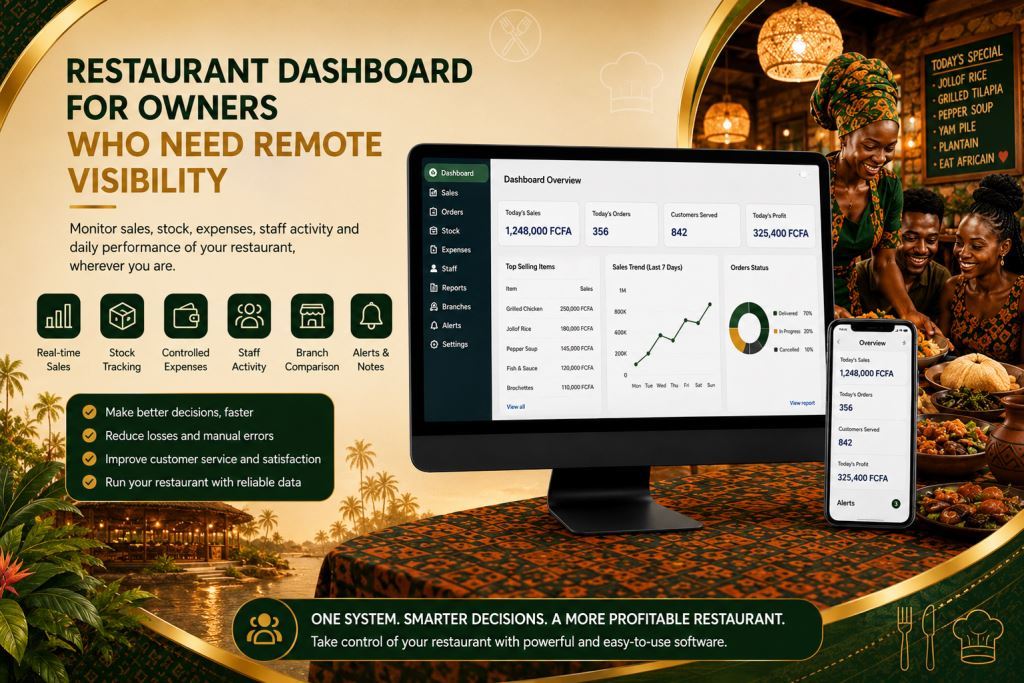
Restaurant Manager Dashboard for Owners Who Need Remote Visibility
Restaurant dashboard software Africa is an important topic for restaurants, cafeterias, bakeries, fast-food businesses, catering teams and food-service groups that want better organization. A reliable dashboard helps them maintain cleaner records, make faster decisions and improve accountability. Prosoft Africa creates practical software solutions for businesses in Cameroon and across Africa.
The purpose of this guide is to help restaurant owners, managers, cashiers, waiters, kitchen teams, caterers and food-service operators understand how a management dashboard supports daily work. It also explains which mistakes to avoid and how to prepare for a successful implementation.
For many businesses, the biggest challenge is not simply the lack of software. Staff often keep important information in notebooks, spreadsheets, mobile phones and paper receipts. As a result, managers spend valuable time searching for information instead of improving customer service. A centralized system stores every record in one place and makes information easy to find.
Moreover, a restaurant dashboard allows owners to monitor sales, expenses, inventory, staff performance and daily operations from any location. They no longer need to call employees repeatedly to receive updates. Instead, they can review accurate information through a single interface whenever they need it.
A dashboard also works best when it forms part of a complete restaurant management system. Such a solution combines POS sales, customer orders, table management, menus, recipes, inventory, expenses, employee schedules and profit reports. Consequently, the business avoids using several disconnected tools. It builds one reliable platform that supports future growth, additional branches and better reporting.
Why This Topic Matters for Daily Operations
Every restaurant makes hundreds of decisions each day. Staff record sales, process payments, update inventory and serve customers. Managers also approve transactions, review reports and monitor employee activities. Without one centralized system, these tasks become difficult to control.
Furthermore, employees may store information in different places. Some use notebooks while others rely on spreadsheets or verbal communication. This situation increases the risk of mistakes and slows decision-making. Managers often waste time verifying information that should already be available.
A structured digital workflow solves these problems. Every employee follows the same procedures and enters information in the correct place. Consequently, records become more accurate and departments work together more efficiently.
In addition, restaurant owners gain better visibility over daily activities. They can quickly identify delays, unusual transactions or operational risks before they become serious problems. Therefore, software should be viewed as a management improvement rather than a simple technology purchase.
Adapting the Software to Cameroon and African Markets
Restaurant businesses across Cameroon and Africa operate under different conditions. Internet access is not always the same. Computer skills also vary from one team to another. Some businesses manage a single location, while others operate several branches.
For this reason, restaurant management software should remain simple, flexible and easy to learn. It must adapt to existing workflows instead of forcing employees to change everything immediately. A gradual implementation helps staff become comfortable with the system while improving data quality over time.
Finally, successful software implementation depends on more than the number of available features. The real objective is to help users find accurate information quickly. When employees no longer ask where records are stored, the dashboard has achieved its purpose. At that stage, restaurant owners can focus on improving service quality, increasing profitability and expanding their business with confidence.
Common Problems This Software Should Solve
Many restaurants experience the same operational challenges every day. These problems often slow decision-making, reduce accountability and make it difficult to measure performance accurately. Fortunately, a well-designed restaurant dashboard can solve many of these issues by centralizing information and improving visibility.
Owners Depend Too Much on Phone Calls
Many restaurant owners still rely on phone calls to receive updates about sales, expenses or stock levels. This approach may work when the business is small. However, it becomes inefficient as operations grow.
A restaurant dashboard gives owners direct access to real-time information. They can review performance from any location without waiting for staff to answer calls. As a result, decisions become faster and more reliable.
Reports Arrive Too Late
Some businesses receive reports only after a cash shortage or stock problem has already occurred. By that time, correcting the issue becomes much more difficult.
A modern dashboard provides timely reports throughout the day. Therefore, managers can identify unusual activity early and take corrective action before the problem grows.
Branch Performance Is Difficult to Compare
Businesses with multiple branches often use different reporting methods. One manager may prepare detailed reports while another provides only basic figures. As a result, owners cannot compare locations fairly.
A centralized dashboard solves this problem by applying the same reporting standards across every branch. Managers can compare sales, expenses, profits and staff performance using identical indicators.
Sales Totals Hide Important Details
High sales figures do not always mean strong business performance. Some products may generate excellent profits, while others reduce overall margins.
For this reason, a restaurant dashboard should display detailed product information instead of only daily totals. Managers can identify best-selling items, slow-moving products and menu items that require attention.
Reporting Formats Are Not Standardized
Many restaurants allow each manager to prepare reports differently. Consequently, owners spend extra time interpreting different documents instead of reviewing consistent information.
Standardized reports eliminate this confusion. Every location follows the same format, making performance easier to evaluate and compare.
Reporting and Communication Challenges
Another common issue involves summary reports with little supporting information. A total may appear correct, but managers cannot immediately verify where the figures originated.
A reliable dashboard allows users to move from summary reports to detailed records. They can review receipts, customer orders, invoices, stock movements and payment histories in just a few clicks. Therefore, every important figure can be verified quickly.
Good communication also improves because everyone works with the same information. Staff no longer depend on handwritten notes or verbal explanations to understand daily operations.
Keeping a Complete Audit Trail
Every business occasionally needs to correct mistakes. However, every correction should remain visible and properly documented.
A good restaurant management system records who changed the information, when the change occurred and why it was necessary. Supervisors can also review and approve sensitive modifications before they become permanent.
This level of transparency protects both the business and honest employees. It also strengthens accountability and makes future investigations much easier whenever questions arise.
Key Features to Look For
Choosing the right restaurant dashboard involves more than selecting attractive software. Instead, businesses should focus on features that improve daily operations and simplify decision-making. A practical dashboard brings together the most important information in one place and helps managers react quickly to changing situations.
Daily Sales Dashboard
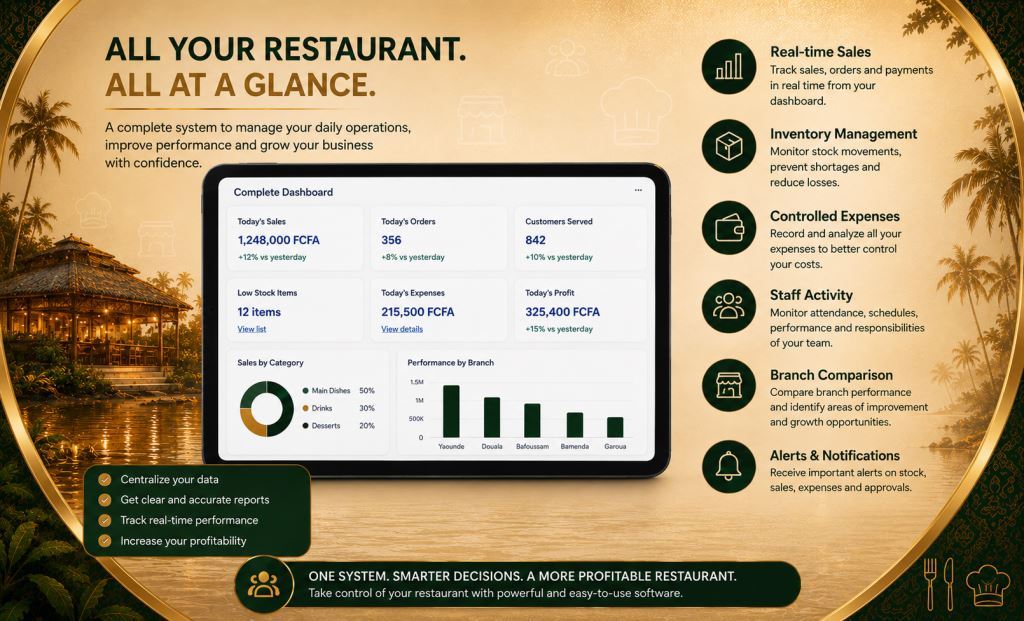
The daily sales dashboard is one of the most valuable management tools. It gives owners and managers a clear overview of sales throughout the day. They can monitor revenue by cashier, product, department or branch without waiting for printed reports.
In addition, the dashboard connects directly with the POS system. Every completed transaction updates the reports automatically. Consequently, managers always work with current information instead of outdated figures.
Inventory Movement Dashboard
Inventory control is essential for every restaurant. A good dashboard displays stock received, stock issued and current inventory levels in real time. Managers can immediately identify products that require replenishment.
Furthermore, inventory data links directly to recipes, sales and purchasing records. This connection helps businesses detect unusual stock losses and reduce unnecessary waste.
Expense Monitoring
Operating expenses affect restaurant profitability every day. For this reason, managers should monitor expenses continuously instead of waiting until the end of the month.
A modern dashboard groups expenses into clear categories such as food purchases, supplier payments, utilities, salaries and other operating costs. As a result, business owners understand where money is being spent and can control unnecessary costs more effectively.
Staff Activity Reports
Employee performance plays a major role in restaurant success. A dashboard should therefore provide clear information about staff attendance, completed tasks and daily activities.
Managers can review individual performance without searching through multiple records. In addition, every important action remains linked to the employee who performed it. This improves accountability while reducing misunderstandings between departments.
Branch Performance Comparison
Restaurant groups with multiple locations need consistent performance measurements. A centralized dashboard compares sales, expenses, profits and operational results across every branch.
Because every location follows the same reporting structure, comparisons become fair and reliable. Owners can quickly identify high-performing branches and provide additional support where improvements are needed.
Comparing branch performance becomes much more effective when every location follows the same reporting standards. Read our article Restaurant Reports, Staff Shifts And Multi-Branch Control For Owners to discover how centralized reporting, staff management and multi-branch control help restaurant owners improve operational performance.
Alerts and Notifications
A modern dashboard should actively notify managers when attention is required. For example, it can generate alerts for low inventory, unusual expenses, delayed reports or cash differences.
These notifications allow managers to respond before small issues become major operational problems. Early action improves efficiency and reduces financial risk.
Configure Features According to Business Needs
Not every restaurant requires the same dashboard configuration. A small café and a large restaurant chain often have different reporting requirements. Therefore, businesses should activate only the features that support their daily operations.
Prosoft Africa helps restaurants analyze their workflows before implementation. This approach ensures that every dashboard feature serves a practical purpose. Instead of adding unnecessary complexity, the software becomes a valuable management tool that supports long-term growth and better decision-making.
Benefits for Owners, Managers, Staff and Daily Operations
A restaurant dashboard creates value for everyone involved in the business. First, owners gain better visibility over daily operations. At the same time, managers receive accurate information that helps them make faster decisions. Staff members also benefit because they work with clear procedures and reliable records.
Better Business Visibility
One of the biggest advantages of a restaurant dashboard is improved visibility. Owners no longer need to depend on phone calls or handwritten reports to understand what is happening in their restaurants.
Instead, they can review sales, expenses, inventory levels and staff activity from one screen. As a result, important information becomes available whenever it is needed, even when they are away from the business.
Faster and Better Decisions
Restaurant managers make many decisions throughout the day. They approve discounts, monitor sales, control expenses and supervise employees. Therefore, they need accurate information at all times.
A centralized dashboard provides real-time reports that support confident decision-making. Managers no longer waste time searching for data because the information is already organized and easy to access.
Improved Expense Control
Controlling expenses is essential for long-term profitability. A restaurant dashboard records daily operating costs and presents them in clear reports.
Managers can compare spending across different periods, departments or branches. Consequently, they identify unusual expenses more quickly and take corrective action before small issues become significant financial problems.
Monitoring expenses through a management dashboard is only part of effective financial control. Explore our article Restaurant Expense Tracking Software Cameroon | Cost Control to learn how detailed expense tracking helps restaurants reduce operating costs and improve long-term profitability.
Better Inventory Management
Inventory directly affects customer service and restaurant profits. A dashboard helps managers monitor stock levels, product usage and purchasing activities from one location.
Furthermore, the system highlights low-stock items before shortages occur. This allows purchasing decisions to be made earlier and helps reduce waste caused by over-ordering or poor inventory control.
Greater Staff Accountability
Every employee contributes to the success of the restaurant. A dashboard records important activities such as sales, approvals, inventory transactions and attendance.
Because every action is linked to a user account, managers can easily understand who performed each task. This approach encourages accountability while protecting employees from unfair accusations.
Easier Multi-Branch Management
Businesses operating several restaurants often struggle to compare performance between locations. Different reporting methods can make comparisons inaccurate.
A centralized dashboard solves this problem by using the same reporting standards for every branch. As a result, owners can compare revenue, expenses, profitability and staff performance using consistent information.
Better Planning for Future Growth
Reliable data helps businesses prepare for the future. Managers can identify sales trends, seasonal demand, popular menu items and operational challenges before they become major concerns.
In addition, historical reports support budgeting, purchasing decisions and expansion planning. Better information ultimately leads to stronger business performance.
How to Implement a Restaurant Dashboard Successfully
Installing software is only one part of the process. More importantly, businesses should prepare their teams and organize their workflows before implementation begins.
Review Existing Workflows
Start by examining how daily operations currently work. Identify the records employees create, the reports managers require and the areas where mistakes occur most often.
This assessment makes it easier to configure the software according to real operational needs.
Prepare Your Data
Before launching the system, organize essential business information. Product lists, customer records, suppliers, inventory balances and user accounts should all be reviewed carefully.
Well-prepared data makes implementation faster and improves reporting accuracy from the first day.
Define User Permissions
Different employees perform different responsibilities. Cashiers, managers, storekeepers and business owners should not all have the same system access.
Proper permission settings improve security while making the software easier to manage.
Train Every Employee
Training should focus on real restaurant activities instead of general software demonstrations. Employees learn more effectively when they practice entering sales, processing payments, updating inventory and generating reports.
Practical training also increases user confidence and reduces mistakes after implementation.
Monitor the First Weeks
The first weeks after deployment are important. Managers should regularly review reports, verify data accuracy and answer staff questions.
Early monitoring helps identify incorrect procedures before they become permanent habits.
Expand the System Gradually
Businesses do not need every feature on the first day. Instead, they should begin with the most important workflows and introduce additional modules over time.
A gradual rollout reduces confusion, improves user adoption and allows employees to become comfortable with each new feature before moving to the next stage.
Available Across Cameroon and Africa
Prosoft Africa provides restaurant management software, installation, training and technical support for restaurants, cafeterias, bakeries, fast-food businesses, catering teams and food-service groups throughout Cameroon. Its services are available in Douala, Yaounde, Buea, Bamenda, Limbe, Bafoussam, Garoua, Maroua, Ngaoundere, Bertoua and many other cities.
In addition, organizations outside Cameroon can request online demonstrations, remote installation assistance and virtual staff training. This approach allows businesses across Africa to implement the software successfully without requiring on-site support.
Furthermore, Prosoft Africa continues to assist customers after deployment. Ongoing technical support helps restaurants improve reporting, optimize workflows and make better use of the software as their operations grow.
Discover how our restaurant management software simplifies restaurant management with an intuitive and data-driven dashboard.
Frequently Asked Questions
Who should use restaurant dashboard software Africa?
This software is designed for restaurant owners, managers, cashiers, waiters, kitchen teams, catering businesses and food-service operators that want better organization, accurate reporting and improved operational control.
Should every feature be enabled immediately?
No. Most restaurants achieve better results by starting with essential modules such as sales, inventory and reporting. Additional features can be activated gradually as employees become familiar with the system.
Can the software manage multiple restaurant branches?
Yes. The dashboard allows owners to monitor several branches from one interface. They can compare sales, expenses, inventory levels, profits and staff performance using standardized reports.
Does Prosoft Africa provide training and support?
Yes. Prosoft Africa offers software installation, configuration, user training and continuous technical support. This guidance helps restaurants implement the system successfully and maximize its long-term value.
Conclusion
Choosing restaurant dashboard software Africa is more than a technology decision. It is a strategic investment in better restaurant management. A well-designed dashboard improves visibility, strengthens accountability and provides reliable information for daily decision-making.
Moreover, restaurant owners can monitor sales, inventory, expenses, staff performance and business trends from a single platform. This centralized approach reduces manual work, improves reporting accuracy and supports faster management decisions.
As the business grows, the software continues to support new users, additional branches and more advanced reporting. Consequently, restaurants build a stronger operational foundation for long-term success.
Prosoft Africa helps restaurants, cafeterias, bakeries, fast-food businesses, catering teams and food-service groups across Cameroon and Africa evaluate their requirements, configure the right modules, train employees and support successful adoption after implementation. Request a personalized demonstration today and discover how the software can improve your restaurant’s daily operations, reporting and long-term performance.
Transform the way you manage your restaurant with Prosoft Africa. Explore expert articles on restaurant management software, POS systems, inventory control, order management, billing, and business automation. Visit our blog to discover practical strategies and innovative solutions that help restaurants improve efficiency, increase profitability, and deliver exceptional customer service.
Follow Prosoft Africa on Facebook, Instagram, LinkedIn, X (Twitter), and TikTok for live demos, expert insights, customer success stories, and the latest innovations transforming restaurant management across Africa.
