
Pharmacy, Laboratory and Stock Control in Hospital Management Software
Hospital pharmacy and laboratory software is no longer only a technical solution for large organizations. It has become an essential tool for clinics, hospitals, laboratories, pharmacies and healthcare centers across Cameroon and Africa. It helps healthcare providers reduce confusion, protect patient records and improve daily operations. Prosoft Africa supports clinic owners, hospital administrators, doctors, nurses, pharmacists, laboratory staff, cashiers and reception teams by replacing manual processes with an organized digital system. The company also provides software setup, staff training and continuous technical support.
Healthcare organizations in Douala, Yaounde and many other cities continue to face growing demands. Patients expect faster service, while administrators need greater financial accountability. Paper records and disconnected spreadsheets may work for small facilities. However, they become difficult to manage as the number of patients, transactions or branches increases. Hospital management software provides a structured way to organize information while preserving the personal care that healthcare organizations are known for.
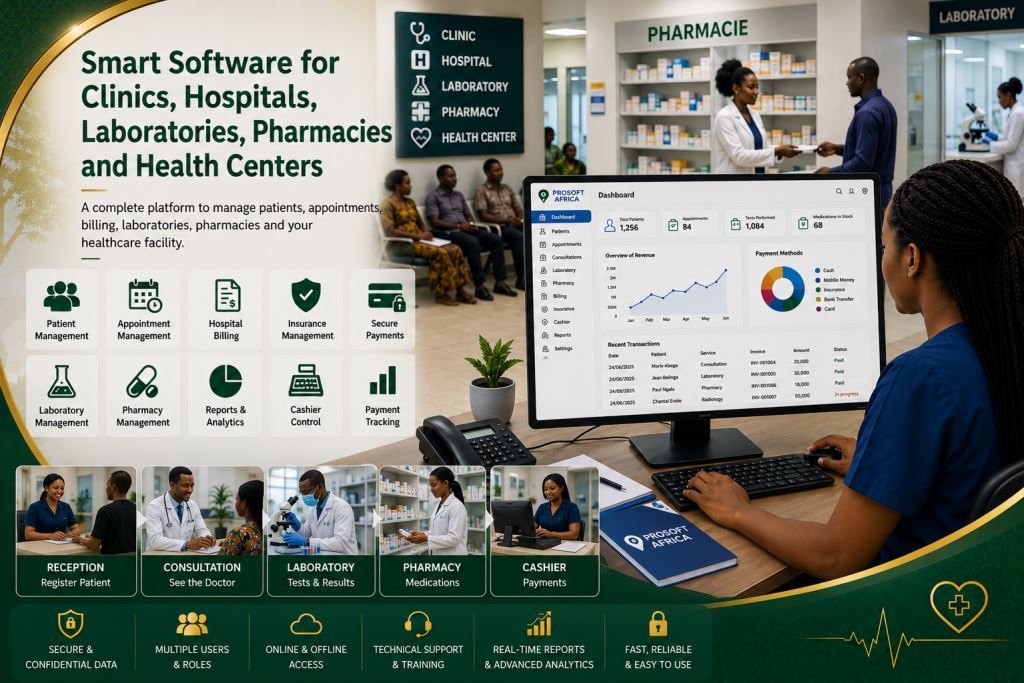
Pharmacy and laboratory departments generate many important records every day. These include prescriptions, medicine stock, laboratory requests, test results and inventory updates. When these records remain separate from reception, billing and patient files, delays and costly mistakes become more common. An integrated hospital management system connects every department, improves communication and gives staff access to accurate information whenever they need it.
Why This Topic Matters For Organizations In Cameroon And Africa
Many healthcare organizations invest in hospital management software because they want to solve practical challenges. Staff often spend valuable time searching for files, checking payment records, confirming balances and rewriting information in different registers. Manual processes slow down daily work and increase the risk of errors. Every delay creates additional work for another department.
Organizations also face problems such as missing patient files, long queues at reception, delayed billing and inaccurate invoices. These issues reduce trust between management, employees and patients. Even when staff perform their duties correctly, incomplete records can make it difficult to verify transactions or explain financial reports. Managers also struggle to make informed decisions when important information is unavailable or outdated.
Growth creates another challenge. A process that works well in one clinic may not work after the organization expands. More patients, additional staff and multiple branches require stronger controls and better coordination. Without a centralized system, every department develops its own procedures. As a result, duplicate records, inconsistent reporting and communication problems become common.
Business continuity is equally important. Organizations should not lose valuable information when an employee resigns, retires or changes roles. A properly configured hospital management system stores knowledge securely within the organization instead of relying on personal notebooks or individual computers. Digital management therefore improves operational stability and supports long-term growth.
Key Features And Capabilities To Look For
Drug Stock Levels
A reliable hospital management system makes drug stock management simple and accurate. Staff can monitor medicine quantities through an easy-to-use dashboard instead of relying on handwritten records. Managers can quickly check available stock, identify shortages and make informed purchasing decisions. Digital stock control reduces errors, improves accountability and produces reliable reports. For healthcare organizations in Cameroon, this feature helps pharmacists serve patients more efficiently while maintaining accurate inventory records.
Expiry And Purchasing
Managing medicine expiry dates and purchasing is essential for every healthcare facility. A good hospital management system tracks expiry dates, purchase history and supplier information in one place. Pharmacists can identify medicines that will expire soon and remove them before they affect patient safety. Managers can also monitor purchasing trends and avoid unnecessary orders. These features reduce waste, improve stock planning and help organizations maintain reliable medicine supplies.
Laboratory Test Workflow
An efficient laboratory workflow allows healthcare professionals to process tests quickly and accurately. Staff can register laboratory requests, assign tests, monitor progress and update patient records from one system. Doctors receive results faster, while laboratory personnel spend less time handling paperwork. This organized process reduces delays, improves communication between departments and increases patient satisfaction.
Results Recording
Accurate laboratory results are critical for quality patient care. Hospital management software allows laboratory staff to record, store and retrieve test results securely. Authorized healthcare professionals can access the information immediately whenever they need it. Digital records reduce the risk of lost reports and eliminate unnecessary duplication. They also make it easier to review patient history and prepare medical reports.
Department Coordination
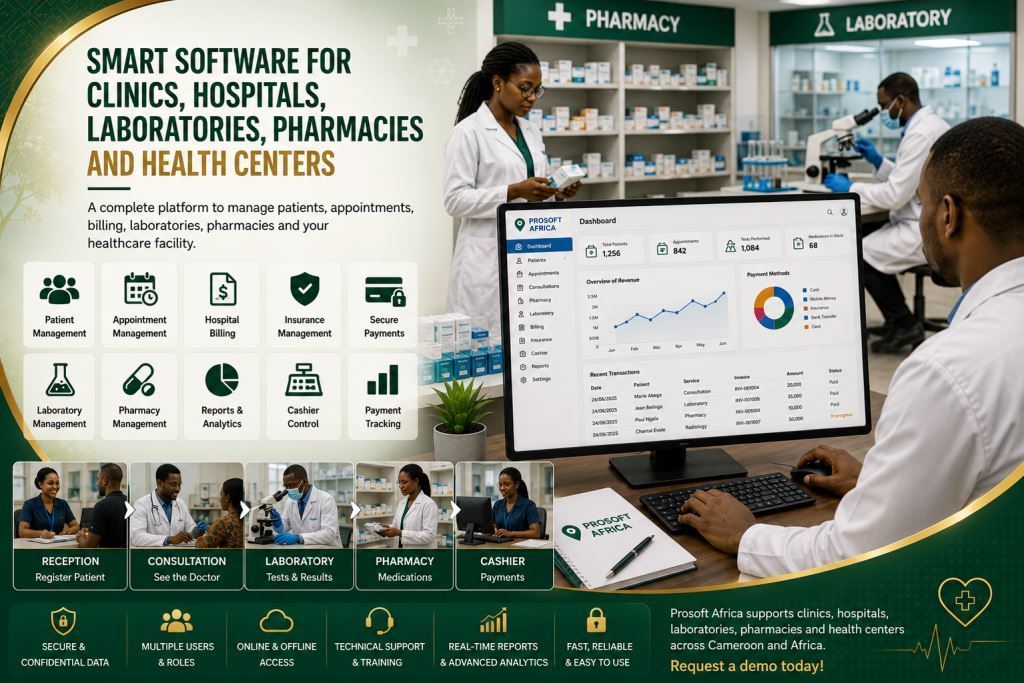
Strong coordination between departments improves the quality of healthcare services. Hospital management software connects reception, consultation, pharmacy, laboratory, billing and administration within a single platform. Staff no longer need to transfer information manually from one department to another. Instead, they can access updated records in real time. This improves communication, reduces errors and creates a smoother experience for both employees and patients.
Stock Variance Reports
Stock variance reports help managers compare actual inventory with recorded stock levels. These reports quickly identify shortages, overstocking or recording errors. Managers can investigate differences before they become costly problems. Regular stock reports also improve financial accountability and support better purchasing decisions. By monitoring inventory accurately, healthcare organizations can reduce losses and maintain efficient pharmacy operations.
Practical Benefits For Owners, Managers, Staff And Clients
The advantages of hospital management software become clear in everyday operations. Managers no longer need to wait until the end of the month to understand business performance. Instead, they can review reports and monitor activities every day. Authorized users can also access the information they need without depending on a single employee to prepare reports.
Healthcare organizations benefit from well-organized patient records, faster appointment scheduling, efficient billing and accurate payment histories. Staff members complete their work with greater confidence because the system provides clear procedures and reliable information. Patients also receive faster and more professional service, leading to higher satisfaction and stronger trust in the organization.
Better Accountability Through Digital Records
Digital records improve accountability across every department. Managers can see who entered information, when changes occurred and how transactions were processed. User permissions also protect sensitive information by limiting access according to staff responsibilities. Owners, administrators, pharmacists, cashiers, receptionists and laboratory personnel each receive the level of access they require.
Clean digital data also supports better planning. Managers can identify busy periods, monitor medicine usage, analyze stock movement and evaluate financial performance. These insights help healthcare organizations make informed decisions about staffing, purchasing and future expansion.
How To Implement The Software Without Confusing Your Team
A successful implementation begins with a careful review of existing processes. Before installing the software, healthcare organizations should identify the records they keep, the reports they need and the daily challenges staff encounter. This preparation ensures that the software matches real operational needs instead of forcing employees to change effective workflows unnecessarily.
Configure The System Correctly
The next step is system configuration. Prosoft Africa helps organizations define user roles, departments, billing categories, pharmacy items, laboratory services, payment methods, stock records and reporting formats. Proper configuration is essential because it creates a system that reflects the organization’s daily activities. A well-configured platform improves efficiency and reduces frustration from the first day of use.
Train Staff With Practical Examples
Staff training should focus on everyday responsibilities rather than technical concepts. Employees should learn how to register patients, record laboratory requests, manage pharmacy stock, process payments, search records and generate reports. Training sessions should use real examples from the healthcare facility so that staff can apply their knowledge immediately. This practical approach increases confidence and encourages faster adoption.
Monitor Progress After Launch
Implementation does not end after installation. Managers should review system usage regularly during the first few weeks. They should confirm that staff enter information correctly, generate accurate reports and follow the new procedures consistently. Regular follow-up meetings help identify small issues before they become larger problems. Continuous support also encourages staff to use the software with confidence and improves long-term success.
Available Across Cameroon And Africa
Prosoft Africa provides hospital management software for clinics, hospitals, laboratories, pharmacies and healthcare centers throughout Cameroon. The company serves organizations in Douala, Yaounde, Buea, Bamenda, Limbe, Bafoussam, Garoua, Maroua, Ngaoundere and Bertoua. It also supports healthcare providers across Africa through online demonstrations, remote installation, staff training and ongoing technical assistance.
Healthcare organizations outside major cities can also benefit from remote implementation. Teams can schedule an online demonstration, discuss their requirements, prepare their data and complete staff training without waiting for an on-site visit. When physical installation or training becomes necessary, Prosoft Africa can arrange support based on the client’s location and project requirements.
Explore our Hospital Management Software to discover how our Hospital Pharmacy and Laboratory Software simplifies pharmacy management, laboratory operations, patient records, billing, and inventory control.
Frequently Asked Questions
Is hospital pharmacy and laboratory software suitable for small healthcare facilities?
Yes. Small clinics, pharmacies and laboratories often benefit the most from digital management. They can organize patient records, manage medicine stock and improve billing before growth creates more complex challenges. The software should match the organization’s size, budget and operational needs.
Can Prosoft Africa provide installation and staff training?
Yes. Prosoft Africa offers software installation, system configuration, staff training and ongoing technical support. This complete approach helps healthcare organizations implement the system successfully and encourages employees to adopt the new workflow with confidence.
Should healthcare organizations create separate web pages for every city in Cameroon?
Not necessarily. Creating multiple city pages only improves SEO when each page contains unique and valuable local information. A better strategy is to publish high-quality articles that naturally mention service coverage while focusing on practical healthcare management solutions.
Can the software support multiple users and different branches?
Yes. A modern hospital management system allows multiple authorized users to work at the same time. Administrators can assign different permission levels based on staff responsibilities. Organizations with multiple branches can also monitor activities, reports and inventory from a centralized platform.
What is the best way to start?
Begin by requesting a software demonstration. Next, identify your biggest operational challenges and prepare sample records for review. Finally, choose the modules that your organization needs most during the first implementation phase. Starting with clear priorities makes deployment faster and more effective.
Conclusion
Choosing the right hospital management software is about more than comparing features. The best solution helps healthcare organizations improve efficiency, reduce errors, protect patient records and strengthen decision-making every day. Clinics, hospitals, laboratories, pharmacies and healthcare centers across Cameroon and Africa can benefit from a system that simplifies pharmacy management, laboratory operations, billing and inventory control.
Prosoft Africa helps healthcare organizations implement practical digital solutions through professional consultation, software configuration, staff training and continuous technical support. Whether your facility is upgrading from manual records or replacing an outdated system, the right implementation strategy can transform daily operations. Request a demonstration today and discover how hospital pharmacy and laboratory software can improve productivity, accountability and patient service while supporting your organization’s long-term growth.
Explore more expert articles on hospital management, healthcare digital transformation, and medical technology across Cameroon and Africa to deepen your understanding.
Stay up to date with the latest hospital management software insights by following Prosoft Africa on Facebook, Instagram, LinkedIn, X (Twitter), and TikTok. We regularly share practical tips, product updates, demonstration videos, customer success stories, and the latest innovations in our hospital management solutions for clinics, hospitals, laboratories, pharmacies, and healthcare centers across Africa.
