
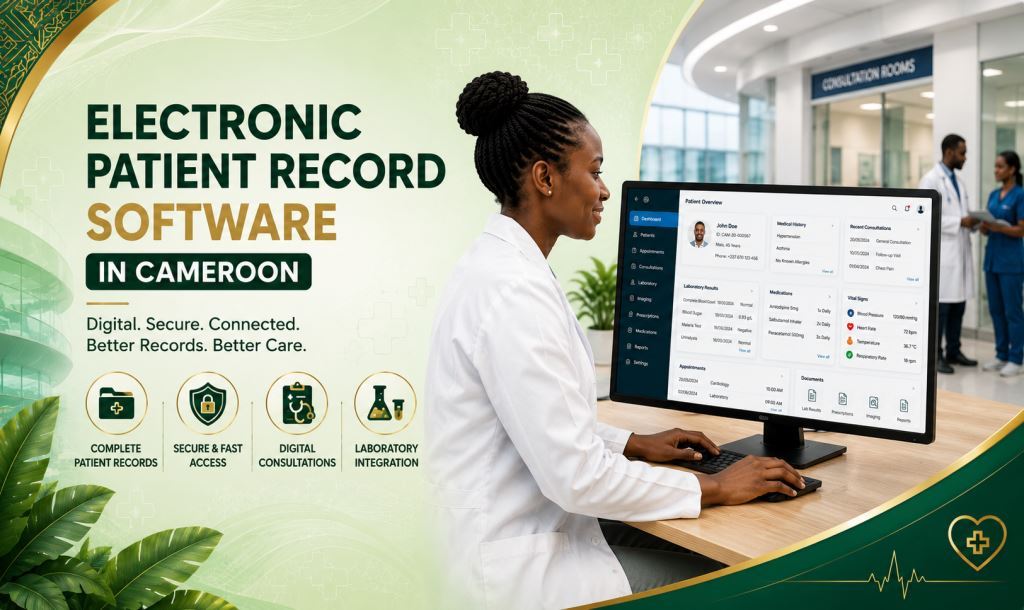
Electronic Patient Record Software In Cameroon: The Digital Solution Transforming African Healthcare
Healthcare organizations across Cameroon are embracing digital technologies to improve patient care, strengthen clinical decision-making, and increase operational efficiency. One of the most important innovations driving this transformation is Electronic Patient Record Software. Hospitals, clinics, medical centers, and specialist practices now rely on digital patient records to manage medical information more accurately and securely.
As healthcare services continue to expand in cities such as Douala, Yaoundé, Bafoussam, Garoua, Maroua, Limbe, Buea, Bertoua, and many other regions, paper-based medical records have become increasingly difficult to manage. Healthcare professionals need immediate access to patient information without searching through paper files or disconnected systems. Electronic Patient Record Software provides this capability by storing every patient’s medical information in one secure digital platform.
Many healthcare facilities still struggle with incomplete patient files, misplaced documents, delayed access to medical histories, and communication challenges between departments. These issues slow clinical workflows, increase administrative workloads, and reduce the quality of patient care. Prosoft Africa addresses these challenges by providing a comprehensive Electronic Patient Record Software solution designed specifically for hospitals and clinics across Cameroon and Africa. The software centralizes patient information, improves collaboration between healthcare professionals, and supports safer, faster, and more efficient healthcare delivery.
Why This Topic Matters For Organizations In Cameroon And Africa
Maintaining accurate patient records is essential for delivering safe and effective healthcare. Every consultation, diagnosis, laboratory examination, prescription, imaging report, treatment plan, and follow-up visit generates important clinical information. Healthcare professionals must access this information quickly to make informed medical decisions and provide continuous patient care.
Many hospitals and clinics still depend on paper records or fragmented digital systems that make information difficult to locate. Lost files, incomplete documentation, duplicate patient records, and delayed access to medical histories often affect both healthcare providers and patients. These challenges increase waiting times, create unnecessary administrative work, and raise the risk of medical errors.
As healthcare organizations continue to grow, managing patient information becomes even more complex. Multiple departments including reception, consultation rooms, laboratories, pharmacies, radiology units, emergency departments, and inpatient wards must share the same patient information. Without a centralized Electronic Patient Record Software solution, departments often maintain separate records, leading to inconsistencies and communication gaps.
Electronic Patient Record Software solves these challenges by creating a single, secure, and centralized patient record that authorized healthcare professionals can access whenever they need it. This improves collaboration, strengthens patient safety, and supports better clinical outcomes across the healthcare facility.
Key Features And Capabilities To Look For
Complete Medical History
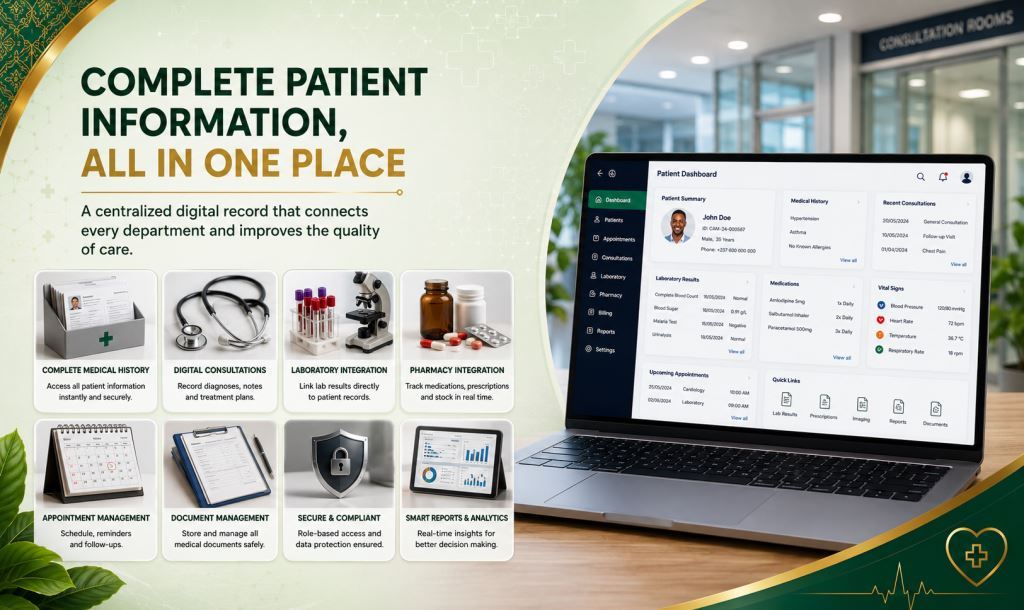
A reliable Electronic Patient Record Software should maintain a complete digital history for every patient. The system securely stores consultations, diagnoses, allergies, medications, laboratory results, imaging reports, vaccination records, previous treatments, chronic conditions, and follow-up visits. Healthcare professionals can review a patient’s entire medical history within seconds, allowing them to make faster and better-informed clinical decisions.
Fast And Secure Access
Healthcare professionals need immediate access to patient information during consultations and emergency situations. Electronic Patient Record Software allows authorized users to retrieve patient records quickly from a secure digital database. Doctors, nurses, and other healthcare staff can review medical histories without searching through paper files, reducing waiting times and improving workflow efficiency.
Digital Consultation Workflow
Electronic Patient Record Software enables healthcare providers to document every consultation electronically. Doctors can enter clinical notes, diagnoses, treatment plans, prescriptions, and recommendations directly into the patient’s digital file during the consultation. This approach improves documentation accuracy, reduces paperwork, and ensures that patient information remains complete and up to date.
To further improve consultation efficiency, healthcare providers can integrate Consultation Management Software with Electronic Patient Record Software, ensuring every patient visit is accurately documented, easily accessible, and seamlessly connected to the complete medical history.
Integrated Laboratory Management
A modern Electronic Patient Record Software should integrate seamlessly with laboratory services. Laboratory staff can upload test requests and results directly into each patient’s digital record without requiring manual data entry. Doctors receive laboratory results more quickly, allowing them to review findings immediately and begin appropriate treatment without unnecessary delays.
Integrated Pharmacy Management
Electronic Patient Record Software becomes even more valuable when it connects directly with the hospital pharmacy. Doctors can send prescriptions electronically from the consultation room to the pharmacy without relying on handwritten notes. Pharmacists receive prescriptions instantly, verify medications, and update dispensing records within the patient’s digital file. This integrated workflow reduces medication errors, improves communication between departments, and ensures that every prescription becomes part of the patient’s permanent medical history.
Beyond managing patient information, Electronic Patient Record Software also supports Hospital Billing Software by creating a seamless connection between clinical services and financial operations. This enables faster billing, greater accuracy, improved revenue management, and more efficient administrative workflows.
Imaging And Examination Storage
Modern healthcare depends on accurate diagnostic information. Electronic Patient Record Software allows hospitals and clinics to store X-rays, ultrasound reports, CT scans, MRI results, ECG reports, and other diagnostic images within each patient’s digital record. Healthcare professionals can review these examinations during future consultations without searching through paper files or separate imaging systems. Centralized storage also improves collaboration between physicians and specialists while supporting faster clinical decision-making.
Data Security And Confidentiality
Patient information requires the highest level of protection. Electronic Patient Record Software uses secure authentication, encrypted databases, role-based user permissions, and detailed audit logs to protect confidential medical information. Administrators determine which employees can access specific records based on their responsibilities. Every activity is recorded automatically, strengthening accountability while helping healthcare organizations protect sensitive patient data.
Smart Statistics And Medical Reporting
Reliable healthcare management depends on accurate information. Electronic Patient Record Software generates detailed reports that help hospital administrators and medical directors monitor patient volumes, disease patterns, consultation trends, laboratory activities, treatment outcomes, and other clinical indicators. These reports support better planning, improve resource allocation, and help healthcare organizations make informed decisions using real-time medical data.
Practical Benefits For Owners, Managers, Staff And Patients
Electronic Patient Record Software delivers significant benefits across the entire healthcare organization. Hospital owners and directors gain better visibility into clinical operations through centralized patient information and comprehensive reporting. Managers can monitor service delivery, evaluate departmental performance, and identify opportunities to improve operational efficiency.
Healthcare professionals also benefit from faster access to complete patient records. Doctors spend less time searching for information and more time focusing on patient care. Nurses access updated treatment plans immediately, laboratory personnel share results electronically, and pharmacists receive digital prescriptions without delays. These improvements strengthen communication between departments and create a more coordinated healthcare environment.
Patients experience shorter waiting times because healthcare providers retrieve medical information instantly. They no longer need to repeat their medical history during every visit, while healthcare professionals make faster and more informed clinical decisions. Improved accuracy, better coordination, and quicker access to information increase patient confidence and contribute to higher-quality healthcare services.
Better Accountability Through Digital Patient Records
Electronic Patient Record Software strengthens accountability throughout every healthcare facility. The software records consultations, prescriptions, laboratory requests, diagnoses, treatment updates, and clinical activities automatically. Healthcare administrators can identify who accessed or updated patient information, creating a complete audit trail that improves transparency and supports regulatory compliance.
Role-based access permissions help healthcare organizations protect confidential medical records while allowing authorized staff to perform their daily responsibilities efficiently. Detailed activity histories simplify internal reviews, improve clinical governance, and support healthcare facilities during inspections or accreditation processes.
Accurate patient information also improves long-term healthcare planning. Hospital managers can analyze treatment outcomes, monitor patient trends, evaluate service demand, and make strategic decisions based on reliable clinical data instead of incomplete paper records.
How To Implement The Software Without Confusing Your Team
